How to choose the right IP PTZ camera for my needs?
Leave a message

When it comes to selecting the right IP PTZ (Pan-Tilt-Zoom) camera to meet your specific needs, there are numerous factors to consider. As an IP PTZ camera supplier, I've witnessed firsthand the diverse requirements of different customers, from small - scale home setups to large - scale corporate and institutional environments. In this blog, I'll guide you through the key considerations to help you make an informed decision.
Understanding Your Requirements
The first step in choosing the right IP PTZ camera is to clearly define your needs. Are you using the camera for a home office, a large conference room, a church service, or a surveillance application? Each use case has its own unique requirements.
For a home office, you might need a camera that is compact, easy to set up, and offers good video quality for video conferencing. It should blend well with your existing workspace and not take up too much space. On the other hand, a large conference room requires a camera with a wide field of view to capture all participants. It should also have high - quality optics to ensure clear images even from a distance.
Churches often need cameras with long - range zoom capabilities to focus on the pulpit, choir, or congregation. They also require cameras that can operate in different lighting conditions, as churches can have both bright and dimly lit areas. Surveillance applications demand cameras with high - resolution imaging, night vision capabilities, and the ability to cover a large area.
Key Features to Consider
Resolution
Resolution is one of the most important factors when choosing an IP PTZ camera. Higher resolution means clearer and more detailed images. Common resolutions include 720p, 1080p (Full HD), 2K, and 4K. For most video conferencing applications, 1080p is sufficient, as it provides a good balance between image quality and bandwidth usage. However, if you need to capture fine details or have a large viewing area, 2K or 4K resolution might be more appropriate.
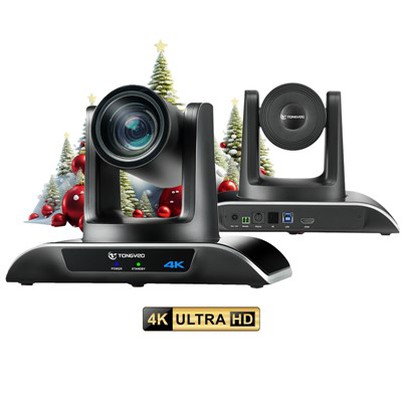
Our Wide Angle IP HDMI SDI USB PTZ Conference Room Camera offers high - resolution imaging, making it suitable for large conference rooms where clear images of all participants are essential.
Zoom Capabilities
Zoom is another crucial feature, especially for applications where you need to focus on specific objects or people. There are two types of zoom: optical and digital. Optical zoom provides true magnification by adjusting the camera's lens, resulting in high - quality, clear images. Digital zoom, on the other hand, simply enlarges the existing image, which can lead to a loss of quality.
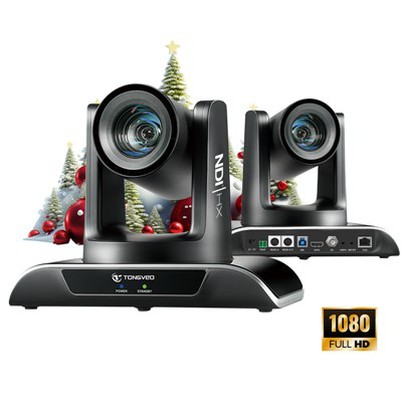
For applications like church services or surveillance, a camera with a high optical zoom ratio is recommended. Our FHD IP HDMI USB3.0 PTZ Video Conferencing Camera with 20x Optical Zoom for Church is designed specifically for such scenarios, allowing you to focus on different areas of the church with ease.
Field of View
The field of view (FOV) determines how much area the camera can cover. A wider FOV is beneficial for large spaces, such as conference rooms or auditoriums. Cameras with a narrow FOV are more suitable for focusing on a specific area or object.
Some IP PTZ cameras offer adjustable FOV, allowing you to customize the coverage according to your needs. This flexibility can be very useful in different environments.
Frame Rate
Frame rate refers to the number of frames per second (fps) that the camera can capture. A higher frame rate results in smoother video, which is important for applications where there is a lot of movement. For video conferencing and surveillance, a frame rate of at least 30 fps is recommended. Some cameras can even support 60 fps or higher, providing even more fluid video.
Low - Light Performance
Good low - light performance is essential, especially for applications that require the camera to operate in dimly lit environments. Cameras with low - light capabilities use technologies such as large image sensors, low - noise processors, and infrared (IR) illumination to capture clear images in the dark.
When choosing a camera for a church or a surveillance application, make sure to check its low - light performance specifications.


Connectivity
The camera should be compatible with your existing network infrastructure. Common connectivity options include Ethernet, Wi - Fi, HDMI, and USB. Ethernet is a reliable option for a stable connection, while Wi - Fi offers more flexibility in terms of placement. HDMI and USB are useful for connecting the camera directly to a computer or a display device.
Pan, Tilt, and Zoom Speed
The speed at which the camera can pan, tilt, and zoom is also an important consideration. Faster speeds are beneficial for applications where you need to quickly adjust the camera's position to follow a moving object or person.
Integration with Existing Systems
If you already have a video conferencing system, surveillance software, or other related equipment, make sure the IP PTZ camera can integrate seamlessly with them. Most modern IP PTZ cameras support standard protocols such as ONVIF, which allows for easy integration with a wide range of systems.
Budget Considerations
Your budget will also play a role in your decision - making process. IP PTZ cameras come in a wide range of prices, depending on their features and capabilities. It's important to balance your requirements with your budget. Sometimes, it might be worth investing a little more in a higher - quality camera that will meet your needs in the long run.
Support and Warranty
Finally, consider the support and warranty offered by the supplier. A reliable supplier should provide technical support, software updates, and a reasonable warranty period. This ensures that you can get help if you encounter any problems with the camera and that you are protected against any manufacturing defects.
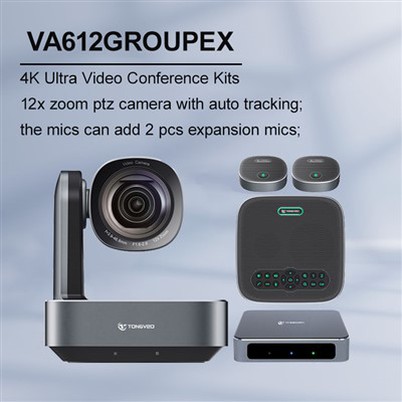
As an IP PTZ camera supplier, we are committed to providing high - quality products and excellent customer service. Our PTZ IP Conference Room Camera is just one of the many products in our portfolio that can meet your specific needs.
If you are interested in purchasing an IP PTZ camera for your requirements, we encourage you to reach out to us for a detailed consultation. Our team of experts can help you choose the right camera and provide you with all the necessary information.
References
- "Video Surveillance Handbook" by Ralph C. Bernstein
- "IP Video Surveillance for Dummies" by Roger Grimes