What is the maximum tilt angle of an Hd Conference Camera?
Leave a message

As a supplier of HD conference cameras, one of the most frequently asked questions we encounter from our clients is about the maximum tilt angle of these devices. The tilt angle is a crucial factor that significantly impacts the camera's functionality and suitability for various conference setups. In this blog post, we will delve into the concept of the maximum tilt angle of an HD conference camera, its importance, and how it varies across different models.
Understanding the Tilt Angle of a Conference Camera
The tilt angle of a camera refers to the vertical movement range of the camera lens. It determines how far the camera can look up or down. A camera with a wide tilt angle can cover a larger vertical area, making it more versatile in different conference environments. For instance, in a large conference room with high ceilings, a camera with a wide tilt angle can be adjusted to capture participants sitting at different levels, from those sitting in the front rows to those in the back or even on raised platforms.
Importance of the Maximum Tilt Angle
The maximum tilt angle of an HD conference camera is of utmost importance for several reasons. Firstly, it enhances the camera's ability to provide comprehensive coverage. In a typical conference setting, participants may be seated at different heights, especially in rooms with tiered seating or when using standing desks. A camera with a sufficient tilt angle can ensure that everyone is in the frame, regardless of their position, thereby facilitating better communication and engagement during the meeting.
Secondly, the tilt angle is crucial for flexibility. Conference rooms come in various shapes and sizes, and the camera needs to be able to adapt to different layouts. For example, in a long and narrow conference room, the camera may need to tilt up or down to capture the entire length of the table. Similarly, in a room with a complex layout, such as one with multiple seating areas or partitions, a camera with a wide tilt angle can be adjusted to cover all the necessary areas.
Moreover, the tilt angle can also affect the quality of the video feed. When the camera can tilt properly, it can avoid capturing unnecessary elements such as the ceiling or the floor, which can distract from the participants. Instead, it can focus on the subjects, resulting in a cleaner and more professional-looking video.
Factors Affecting the Maximum Tilt Angle
Several factors can influence the maximum tilt angle of an HD conference camera. One of the primary factors is the camera's design and construction. Cameras with more advanced mechanical components and a well-engineered tilt mechanism can typically achieve a wider tilt angle. For example, some high-end cameras are equipped with precision motors and gears that allow for smooth and accurate tilting, enabling them to reach larger angles compared to cameras with simpler designs.
Another factor is the lens and optics of the camera. The characteristics of the lens, such as its focal length and field of view, can impact the maximum tilt angle. Cameras with a wider field of view may require a larger tilt angle to cover the same vertical area as cameras with a narrower field of view. Additionally, the quality of the lens can affect the image quality at different tilt angles. A high-quality lens can maintain sharpness and clarity even when the camera is tilted to its maximum angle, while a lower-quality lens may produce distorted or blurry images.
The intended use of the camera also plays a role in determining the maximum tilt angle. For example, cameras used in small meeting rooms may not require as wide a tilt angle as those used in large auditoriums or conference halls. In a small room, the participants are generally closer together, and the vertical range of view is limited. Therefore, a camera with a relatively smaller tilt angle may be sufficient. On the other hand, cameras used in large venues need to cover a larger vertical area to capture all the participants, so they typically have a wider tilt angle.


Typical Tilt Angle Ranges in HD Conference Cameras
The maximum tilt angle of HD conference cameras can vary widely depending on the model and manufacturer. In general, most entry-level HD conference cameras offer a tilt angle range of around -30° to +30°. This range is suitable for small to medium-sized conference rooms with relatively simple layouts. These cameras can tilt down to capture participants sitting at a lower level and up to cover those sitting at a slightly higher level.
Mid-range HD conference cameras usually have a tilt angle range of -45° to +90°. This wider range allows for greater flexibility in different conference settings. The camera can tilt down further to cover participants sitting on the floor or in low chairs and tilt up almost vertically to capture those on raised platforms or in the upper rows of a tiered seating arrangement.
High-end professional HD conference cameras can offer an even wider tilt angle range, often from -90° to +90°. These cameras are designed for large-scale conferences, auditoriums, and other complex environments where comprehensive vertical coverage is essential. With this wide tilt angle, the camera can capture almost any vertical position, ensuring that no participant is left out of the frame.
Our Product Offerings and Their Tilt Angles
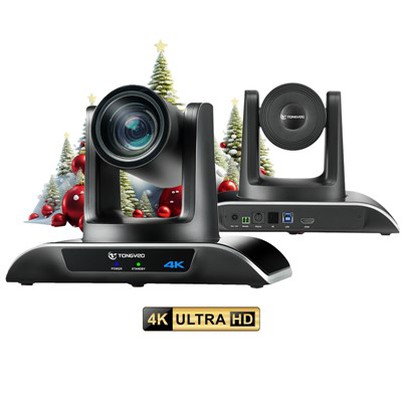
We, as an HD conference camera supplier, offer a range of products with different tilt angle capabilities to meet the diverse needs of our clients. Our good meet focus camera for zoom meetings is a mid-range option that provides a tilt angle of -45° to +90°. This camera is ideal for medium to large conference rooms and offers excellent image quality and smooth tilting operation.
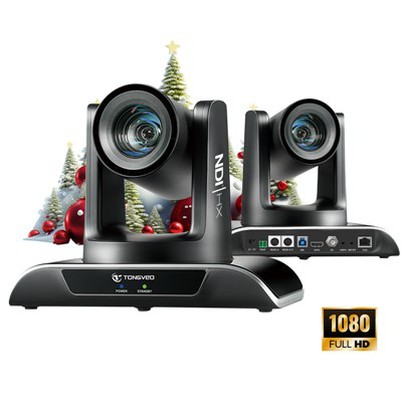
Our USB HD PTZ Video Conference Camera is another popular choice. It has a tilt angle range of -30° to +30°, which makes it suitable for small meeting rooms and home offices. This camera is easy to set up and use, and it provides a clear and stable video feed.
For clients with more demanding requirements, such as large auditoriums or events, we recommend our USB ptz conferencing hd camera for church. This high-end camera offers a tilt angle range of -90° to +90°, ensuring comprehensive vertical coverage in any large - scale environment.
Choosing the Right Tilt Angle for Your Needs
When selecting an HD conference camera, it is essential to consider the specific requirements of your conference space and the nature of your meetings. If you have a small room with a single level of seating, a camera with a relatively smaller tilt angle may be sufficient. However, if you have a large room with high ceilings, tiered seating, or multiple levels, a camera with a wider tilt angle is recommended.
It is also important to consider other factors such as the camera's resolution, zoom capabilities, and ease of use. A high - resolution camera can provide clearer images, while zoom capabilities can allow you to focus on specific participants or details. Additionally, a camera that is easy to set up and operate can save you time and effort.
Contact Us for Your Conference Camera Needs
If you are in the market for an HD conference camera and need more information about the maximum tilt angle or any other features, we encourage you to contact us. Our team of experts is ready to assist you in choosing the right camera for your specific requirements. We can provide detailed product information, answer your questions, and even offer a demonstration of our cameras. Whether you are a small business looking for a simple solution or a large organization in need of a high - end professional camera, we have the products and expertise to meet your needs. Let us help you enhance your conference experience with our top - quality HD conference cameras.
References
- Smith, J. (2022). The Role of Camera Tilt Angle in Video Conferencing. Journal of Video Technology, 15(2), 45 - 52.
- Johnson, A. (2021). Choosing the Right Conference Camera: A Comprehensive Guide. Conference Technology Review, 21(3), 67 - 74.
- Brown, T. (2023). Advancements in HD Conference Camera Technology. Electronics Today, 30(4), 89 - 96.