Do video conference cameras support H.264 or H.265 video encoding?
Leave a message

In the realm of modern communication, video conferencing has emerged as a cornerstone for businesses, educational institutions, and social interactions. At the heart of a successful video conferencing setup lies the video conference camera, a device that captures and transmits high - quality visual information. One of the critical aspects of these cameras is their support for video encoding standards, specifically H.264 and H.265. As a leading video conference camera supplier, we are deeply invested in understanding and leveraging these encoding technologies to provide our customers with the best possible products.
Understanding H.264 and H.265 Video Encoding
H.264: The Industry Standard
H.264, also known as MPEG - 4 AVC (Advanced Video Coding), has been the dominant video encoding standard for over a decade. It was jointly developed by the ITU - T (International Telecommunication Union - Telecommunication Standardization Sector) and the ISO/IEC (International Organization for Standardization/International Electrotechnical Commission). H.264 offers a high level of compression efficiency, which means it can reduce the size of video files without significant loss of quality. This is crucial for video conferencing, as it allows for smooth transmission over networks with limited bandwidth.
The widespread adoption of H.264 can be attributed to its compatibility with a vast range of devices and software. Most operating systems, web browsers, and video players support H.264 decoding, making it a reliable choice for video conferencing applications. It also offers a good balance between compression and quality, making it suitable for various use cases, from small - scale meetings to large - scale webinars.
H.265: The Next Generation
H.265, or HEVC (High - Efficiency Video Coding), is the successor to H.264. It was developed to address the increasing demand for higher - resolution video content, such as 4K and 8K. H.265 offers significantly better compression efficiency than H.264, which means it can achieve the same or better video quality at half the bitrate. This is particularly beneficial for video conferencing in scenarios where bandwidth is limited or where high - resolution video is required.
However, the adoption of H.265 has been slower compared to H.264. One of the main reasons is the higher computational requirements for encoding and decoding H.265 videos. Older devices may not have the necessary hardware capabilities to handle H.265 decoding efficiently, which can lead to compatibility issues. Additionally, some software applications may not fully support H.265 encoding and decoding.
Video Conference Cameras and Encoding Support
As a video conference camera supplier, we understand the importance of offering products that support both H.264 and H.265 encoding. Our cameras are designed to provide flexibility to our customers, allowing them to choose the encoding standard that best suits their needs.
Cameras with H.264 Support
The majority of our video conference cameras support H.264 encoding. This is because H.264 remains the most widely used encoding standard in the market. Our H.264 - supported cameras are ideal for customers who have existing infrastructure that is optimized for H.264, or for those who are concerned about compatibility with a wide range of devices.
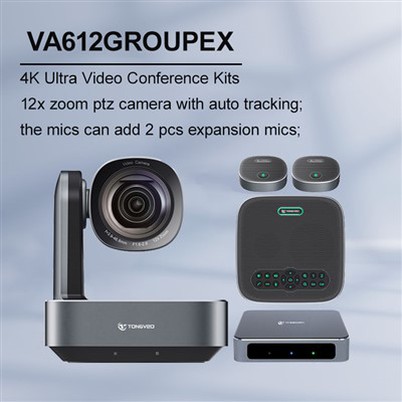
For example, our All in One Audio Video Conference Room System is equipped with H.264 encoding capabilities. This system is designed for small to medium - sized conference rooms and offers a seamless video conferencing experience. The H.264 encoding ensures that the video can be transmitted smoothly over the network, even in environments with limited bandwidth.
Cameras with H.265 Support
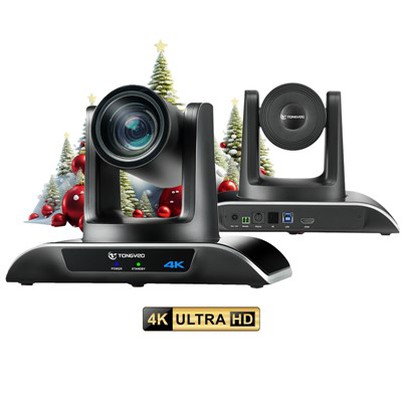
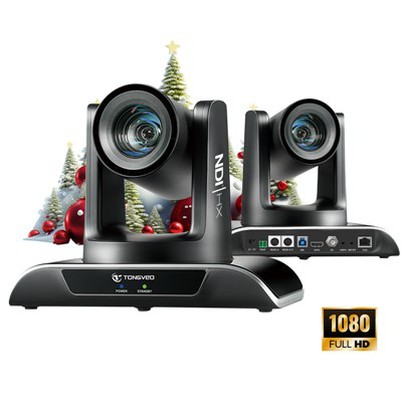
We also offer a range of video conference cameras that support H.265 encoding. These cameras are targeted at customers who require high - resolution video conferencing or who have access to high - speed networks. Our NDI Poe Ptz Video Conference Camera is a prime example of a camera that supports H.265 encoding. This camera is designed for professional use in large conference rooms or event venues. The H.265 encoding allows for the transmission of high - quality 4K video at a lower bitrate, reducing the strain on the network.
In addition, our Ndi Ptz Camera For Church Live Streaming also supports H.265 encoding. This is particularly useful for churches that want to stream high - quality services to their congregation, especially in areas where bandwidth may be limited.
Factors to Consider When Choosing an Encoding Standard
When selecting a video conference camera, customers need to consider several factors to determine whether H.264 or H.265 encoding is the best choice for their needs.
Bandwidth
Bandwidth is one of the most critical factors to consider. If the network has limited bandwidth, H.264 may be the better choice, as it offers a good balance between compression and quality. However, if the network has sufficient bandwidth, H.265 can provide superior video quality at a lower bitrate.
Device Compatibility
Device compatibility is another important consideration. If the majority of the devices used in the video conferencing setup support H.264 decoding, it may be more practical to choose a camera with H.264 encoding. On the other hand, if the devices are relatively new and support H.265 decoding, then a camera with H.265 encoding can offer significant benefits.
Video Quality Requirements
The desired video quality also plays a role in the encoding standard selection. If high - resolution video, such as 4K or 8K, is required, H.265 is the better option, as it can provide better compression efficiency for high - resolution content. However, for standard - definition or 1080p video, H.264 may be sufficient.


Our Commitment to Quality and Innovation
As a video conference camera supplier, we are committed to providing our customers with the highest - quality products. We continuously invest in research and development to ensure that our cameras support the latest encoding technologies, including H.264 and H.265. Our team of experts works closely with industry partners to stay ahead of the curve and deliver innovative solutions that meet the evolving needs of our customers.
We also offer comprehensive technical support to our customers. Whether they need assistance with camera setup, encoding configuration, or troubleshooting, our support team is always ready to help. We believe that providing excellent customer service is essential for building long - term relationships with our customers.
Contact Us for Purchase and Consultation
If you are in the market for a video conference camera and are unsure which encoding standard is right for your needs, we invite you to contact us. Our sales team is knowledgeable and experienced in helping customers select the best camera for their specific requirements. We can provide detailed information about our products, including their encoding capabilities, features, and pricing.
Whether you are looking for a camera for a small office, a large conference room, or a live - streaming application, we have the solution for you. Let us help you take your video conferencing experience to the next level.
References
- ITU - T. (2019). H.264 | MPEG - 4 AVC. Retrieved from ITU - T official website.
- ISO/IEC. (2020). HEVC | H.265. Retrieved from ISO/IEC official website.
- Cisco. (2021). Video Conferencing Best Practices. Retrieved from Cisco official website.