Can an IP PTZ camera be used in a noisy environment?
Leave a message

As a supplier of IP PTZ cameras, I often get asked whether our cameras can be used in noisy environments. This is a crucial question, especially considering the diverse settings where these cameras are deployed. In this blog, I'll delve into the capabilities of IP PTZ cameras in noisy conditions, exploring their features, limitations, and how they can be optimized for such environments.
Understanding IP PTZ Cameras
Before we discuss their performance in noisy environments, let's briefly understand what IP PTZ cameras are. IP (Internet Protocol) cameras transmit data over a network, allowing for remote access and control. PTZ stands for Pan, Tilt, and Zoom, which means these cameras can move horizontally (pan), vertically (tilt), and magnify the image (zoom). This functionality makes them highly versatile and suitable for a wide range of applications, from surveillance to video conferencing.
Noise in Different Environments
Noise can come from various sources and in different forms. In industrial settings, there might be the constant hum of machinery, the clanging of metal, or the high - pitched screech of equipment. In urban areas, traffic noise, construction work, and the general hustle and bustle can create a noisy backdrop. In large conference rooms, the chatter of attendees, the sound of chairs moving, and the operation of ventilation systems can all contribute to the noise level.
How IP PTZ Cameras Can Function in Noisy Environments
Audio Capabilities
Many of our IP PTZ cameras are equipped with built - in microphones that are designed to capture audio along with video. These microphones often have noise - cancellation features. For example, they can use algorithms to distinguish between the desired audio signal (such as a person speaking) and background noise. This is achieved through techniques like beamforming, where the microphone focuses on a specific direction to pick up the relevant sound while reducing noise from other angles.
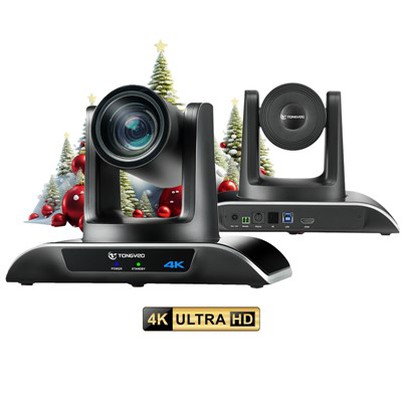
In a large conference room scenario, our PTZ IP Conference Room Camera can effectively isolate the voices of the speakers. Even when there is background noise from the air - conditioning system or the shuffling of papers, the noise - cancellation technology helps to deliver clear audio for remote participants.
Video Performance
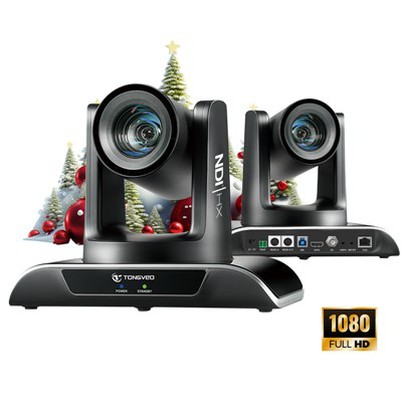
The primary function of an IP PTZ camera is to capture high - quality video. In noisy environments, the video performance is generally not directly affected by the noise itself. Our cameras are built with high - resolution sensors and advanced image - processing algorithms. For instance, the High - Definition 30x Zoom HDMI SDI IP Conference Camera for Large Conference Rooms can provide sharp, clear images even in challenging lighting conditions that might accompany a noisy industrial or large - scale environment.
The pan, tilt, and zoom features also remain fully functional. You can still remotely control the camera to follow a moving subject or focus on a specific area, regardless of the noise level in the surroundings.
Limitations and Challenges
Audio Limitations
While noise - cancellation technology is quite advanced, there are limits. Extremely high - intensity noise, such as that from a large industrial furnace or a jet engine, can overwhelm the microphone's capabilities. In such cases, the noise - cancellation algorithms may not be able to fully filter out the background noise, resulting in a degraded audio quality.
Environmental Factors Affecting the Camera
In some noisy environments, there may be other environmental factors at play. For example, in an industrial setting, there could be dust, vibrations, or extreme temperatures. Dust can accumulate on the camera lens, affecting the video quality. Vibrations can cause the camera to shake, making the image unstable. Our cameras are designed to be robust, but in very harsh conditions, additional protective measures may be required.
Optimizing IP PTZ Cameras for Noisy Environments
Audio Optimization
To enhance the audio performance in noisy environments, external microphones can be used. These external microphones can be placed closer to the sound source, such as a speaker in a conference room. They can also be of a higher quality and have more advanced noise - cancellation features. Additionally, adjusting the audio settings of the camera, such as gain and sensitivity, can help to fine - tune the audio capture.
Physical Protection
For the camera itself, using protective enclosures can shield it from dust, vibrations, and extreme temperatures. These enclosures can be made of durable materials and are designed to allow for proper ventilation while keeping the camera safe. Mounting the camera on a stable platform can also reduce the impact of vibrations on the video quality.
Case Studies
Let's look at a couple of real - world examples. In a large manufacturing plant, our IP PTZ cameras were installed to monitor the production line. Despite the constant noise from the machinery, the cameras were able to capture clear video of the production process. The audio, although somewhat affected by the background noise, was still usable for basic communication purposes. By using external microphones and adjusting the audio settings, the audio quality was significantly improved.


In a busy urban conference center, our Wide Angle IP HDMI SDI USB PTZ Conference Room Camera was used for video conferencing. The camera was able to capture a wide view of the room, and with its noise - cancellation technology, the voices of the speakers were clearly transmitted to the remote participants, even with the background noise from the nearby traffic.
Conclusion
In conclusion, IP PTZ cameras can indeed be used in noisy environments. They have the necessary features, such as noise - cancellation technology for audio and high - quality video capture capabilities, to function effectively. However, it's important to be aware of their limitations and take appropriate steps to optimize their performance. Whether it's using external microphones, providing physical protection, or adjusting the camera settings, there are ways to ensure that these cameras can meet the demands of noisy settings.
If you're interested in learning more about our IP PTZ cameras and how they can be tailored to your specific noisy environment, we invite you to reach out to us for a detailed discussion. Our team of experts is ready to assist you in finding the best solution for your needs.
References
- "Handbook of Video Surveillance Systems" by Thomas A. Campbell
- "Audio Signal Processing for Next - Generation Multimedia Communications" edited by Y. Huang and Y. Xie