What is the maximum distance a 1080p conference cam can cover?
Leave a message

Hey there! As a supplier of 1080p conference cams, I get asked a ton of questions about how far these little guys can go. So, I thought I'd break it all down for you in this blog post.
First off, let's talk about what 1080p actually means. 1080p refers to the resolution of the camera, specifically 1920x1080 pixels. This gives you a pretty crisp and clear image, which is super important for having a good conference call. But when it comes to the maximum distance a 1080p conference cam can cover, it's not just about the resolution. There are a bunch of other factors that come into play.
Factors Affecting the Coverage Distance
Lens Quality
The quality of the lens is a major deal. A high - quality lens can focus better on objects that are far away. Cheaper lenses might start to get blurry or lose detail as the distance increases. Good lenses are designed to reduce distortion and ensure that the light is properly focused, which means you can get a clear image even from a greater distance.
Field of View (FOV)
The FOV is how wide the camera can see. A wider FOV means the cam can capture more area, but it might also spread the pixels thinner, which can affect the clarity at the edges. For example, if you have a camera with a wide FOV, it can cover a large conference room, but someone sitting at the far corner might not be as clear as they would be in a camera with a narrower FOV that can focus on a smaller area more precisely. Our 360 Wide Angle IP Camera for Teams Zoom Meeting has a really wide FOV, which is great for big rooms but you gotta balance it with the distance.
Lighting Conditions
Lighting plays a huge role. If the room is well - lit, the camera can capture a clear image from a farther distance. In dimly lit rooms, the camera might struggle to pick up details, and you'll have to have the participants closer to the cam to get a good picture. For instance, in a windowless room with only a few overhead lights, you might need to have people sitting within 5 - 10 feet of the camera to get a sharp image.
Camera Sensor
The size and quality of the camera sensor also matter. A larger sensor can capture more light, which is especially helpful in low - light situations. It can also provide better image quality overall. So, a camera with a high - end sensor is more likely to be able to cover a greater distance clearly.
Typical Coverage Distances
On average, a good quality 1080p conference cam can cover a distance of about 10 - 15 feet. This is a sweet spot where you'll get a clear and detailed image of the people in front of the camera.
If you've got a super well - lit room, and the camera has a high - quality lens and sensor, you might be able to push that distance up to 20 feet. But at this point, you need to make sure the participants are not moving around too much, as any sudden movement can cause a bit of blurring.
For shorter distances, say within 5 feet, the camera will give you an extremely detailed image. This is great for one - on - one meetings or when you want to focus on a small group of people sitting close to the cam.
Special Cases
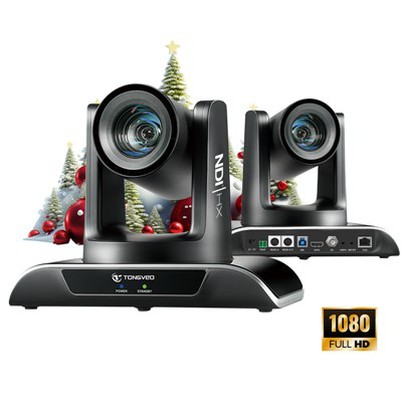
If you're using a camera with pan - tilt - zoom (PTZ) capabilities, like our Ptz Camera For Church Live Streaming, things change a bit. These cameras can move around and zoom in on specific things. So, in theory, they can cover a much larger distance. You can have the camera in one corner of a large hall and still be able to zoom in on people sitting 30 or even 40 feet away. However, when you zoom in, the field of view gets smaller, and you have to be careful not to lose the context of the whole room.


In a small, well - lit office setting, you can get away with using a basic 1080p cam and have it cover a distance of 12 - 15 feet easily. But in a large, open - plan conference room, you might need multiple cameras or a more advanced model with a wider FOV and better zoom capabilities. Our 360 Conference Room Video Cameras for Teams can be a great solution for larger spaces as it can cover a big area with a 360 - degree view.
How to Optimize the Coverage
If you want to get the most out of your 1080p conference cam, here are some tips:
- Good Lighting: Use a combination of overhead lights and desk lamps to evenly light the room. Avoid harsh shadows and make sure the light is focused on the people you want to capture.
- Proper Placement: Mount the camera at eye level or slightly above and make sure it has a clear view of the area you want to cover. Avoid placing it near windows or other sources of bright light that can cause glare.
- Regular Maintenance: Keep the lens clean. A dirty lens can really affect the image quality and reduce the effective coverage distance.
Wrapping Up and Reaching Out
So, there you have it! The maximum distance a 1080p conference cam can cover varies depending on a bunch of factors, but on average, it's around 10 - 15 feet, with the possibility of going up to 20 feet in ideal conditions.
If you're in the market for a 1080p conference cam and want to discuss how our cameras can meet your specific needs, whether it's for a small office or a large conference room, don't hesitate to reach out. We're here to answer all your questions and help you find the perfect solution for your video conferencing setup.
References
- Camera technology textbooks
- Industry - specific research on video conferencing equipment performance
- Manufacturer's specifications for 1080p conference cameras