What is the angle of elevation and depression of a conference camera?
Leave a message

Hey there! As a supplier of conference cameras, I often get asked about the angle of elevation and depression of these nifty devices. So, let's dive right in and break it down in a way that's easy to understand.
First off, what exactly are the angle of elevation and depression? Well, the angle of elevation is the angle between the horizontal line of sight and the line of sight looking upwards. On the flip side, the angle of depression is the angle between the horizontal line of sight and the line of sight looking downwards. In the context of a conference camera, these angles play a crucial role in determining the camera's field of view and how well it can capture the action in a meeting room.
Let's start with the angle of elevation. When you're setting up a conference camera in a room, you want to make sure it has a good view of the participants. If the camera is placed too low, it might have to look up at a steep angle to capture everyone. This can lead to distorted images, especially if the camera has a wide-angle lens. On the other hand, if the camera is placed too high, it might not be able to see the people sitting at the lower levels of the room.
For example, in a large conference room with a high ceiling, you might need to place the camera at a higher position to get a better overall view. But you also need to adjust the angle of elevation so that it doesn't look down too much on the participants. A good rule of thumb is to aim for an angle of elevation that allows the camera to see the faces of the people sitting at the tables without causing any significant distortion.
Now, let's talk about the angle of depression. This is important when you want the camera to focus on a specific area, like a presentation screen or a podium. If the camera is placed at a high position and needs to look down at the screen, you need to adjust the angle of depression carefully. A too-steep angle of depression can make the screen look distorted or cut off important parts of the presentation.
To get the right angle of depression, you might need to experiment a bit. You can start by setting the camera at a rough position and then make small adjustments until you get the best view. Some of our pan tilt zoom video camera for large conference room call come with remote control features, which make it really easy to adjust the angle of elevation and depression on the fly.
One of the things that affects the angle of elevation and depression is the type of lens the camera has. A wide-angle lens can cover a larger area, but it might also introduce more distortion at the edges. A telephoto lens, on the other hand, can zoom in on a specific area but has a narrower field of view. So, when choosing a conference camera, you need to consider the size of the room and the specific requirements of your meetings.
For instance, if you have a small meeting room, a camera with a wide-angle lens might be sufficient. But if you have a large conference hall and need to focus on a speaker on the stage, a 4K AI Livestreaming PTZ Camera with a telephoto lens and the ability to adjust the angle of elevation and depression precisely could be a better choice.
Another factor to consider is the height of the camera mount. The higher the camera is mounted, the larger the area it can cover. But as I mentioned earlier, it also needs to be adjusted correctly to avoid distortion. You can use a wall mount or a ceiling mount depending on the layout of the room. A ceiling mount can be a great option for large rooms as it allows the camera to have a bird's-eye view without taking up any floor or wall space.
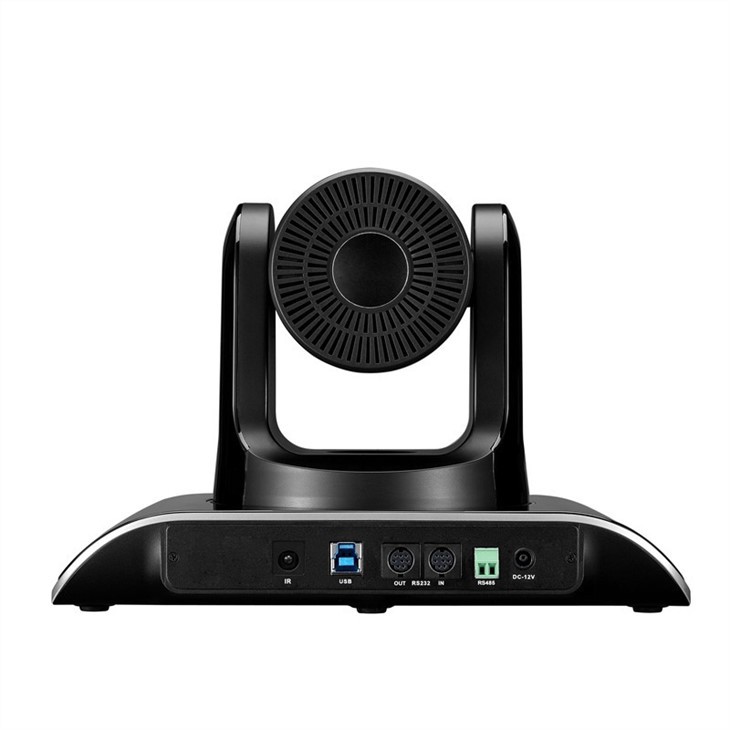

When it comes to installation, it's important to follow the manufacturer's instructions carefully. Make sure the camera is securely mounted and that the cables are properly connected. Some cameras come with built-in leveling tools to help you set the correct angle of elevation and depression.
Now, let's talk about how these angles impact the overall quality of the video conference. A well-adjusted camera with the right angle of elevation and depression can make a huge difference in the clarity and engagement of the meeting. Participants can see each other clearly, and presenters can be sure that their content is being captured properly.
For example, if you're using a High Quality Camera For Video Conferencing and have set the angles correctly, the video will look sharp and natural. This can enhance the communication and collaboration among the participants, making the meeting more productive.
In conclusion, understanding the angle of elevation and depression of a conference camera is essential for getting the best results in your video conferences. By considering factors like the size of the room, the type of lens, and the height of the camera mount, you can ensure that your camera is set up to capture the action effectively.
If you're in the market for a new conference camera or need some advice on setting up your existing one, don't hesitate to reach out. We're here to help you make the most of your video conferencing experience. Whether you're a small business or a large corporation, we have the right camera solutions for you. So, let's start a conversation and find the perfect conference camera for your needs.
References
- General knowledge on camera optics and video conferencing technology.