How accurate is the positioning of a Pelco Ptz Controller?
Leave a message

As a supplier of Pelco Ptz Controllers, I've had numerous discussions with clients about the accuracy of these devices. In this blog, I'll delve into the factors that affect the positioning accuracy of Pelco Ptz Controllers, explore real - world applications, and provide insights based on my experience in the industry.

Understanding Pelco Ptz Controllers
Pelco Ptz Controllers are essential components in modern surveillance systems. They allow operators to control the Pan, Tilt, and Zoom (PTZ) functions of cameras remotely. The Pelco Ptz Controller offers a high - level of flexibility, enabling users to precisely position the camera to capture the desired area.
The basic working principle of a Pelco Ptz Controller involves sending electrical signals to the camera. These signals determine the movement and zoom level of the camera. The accuracy of these signals is crucial as it directly impacts the camera's ability to reach the intended position.
Factors Affecting Positioning Accuracy
1. Hardware Quality
The quality of the internal components of the Pelco Ptz Controller plays a significant role in positioning accuracy. High - quality motors, encoders, and circuit boards are essential for precise movement control. For instance, a high - resolution encoder can provide more detailed information about the camera's position, allowing the controller to make more accurate adjustments. In contrast, low - quality components may lead to errors in positioning, such as overshooting or undershooting the target position.
2. Environmental Conditions
Environmental factors can also affect the positioning accuracy of Pelco Ptz Controllers. Extreme temperatures, humidity, and vibration can all have a negative impact. High temperatures can cause the components to expand, altering their electrical properties and potentially leading to inaccurate signal transmission. Humidity can cause corrosion on the circuit boards, which may disrupt the flow of electrical signals. Vibration, whether from nearby machinery or seismic activity, can cause the camera to move unintentionally, making it difficult for the controller to maintain the desired position.
3. Communication Protocols
The communication protocol used between the Pelco Ptz Controller and the camera is another crucial factor. Different cameras support different communication protocols, and the controller must be compatible with the camera's protocol to ensure accurate positioning. For example, the Pelco - D and Pelco - P protocols are widely used in the industry. If the controller and the camera are not configured to use the same protocol, there may be errors in the transmission of commands, resulting in inaccurate positioning.
4. Installation and Calibration
Proper installation and calibration of the Pelco Ptz Controller are essential for accurate positioning. If the controller is not installed correctly, it may not be able to send the correct signals to the camera. Calibration is also necessary to ensure that the controller accurately interprets the camera's position and movement. A poorly calibrated controller may think the camera is in a different position than it actually is, leading to inaccurate positioning.
Real - World Applications and Accuracy Requirements
1. Surveillance in Public Areas
In public areas such as airports, train stations, and shopping malls, accurate positioning of surveillance cameras is crucial. Operators need to be able to quickly and precisely position the camera to monitor specific areas or track individuals. For example, in an airport, if there is a security incident, the operator needs to be able to use the Pelco Ptz Controller to immediately position the camera on the relevant area to gather evidence. In these applications, the positioning accuracy of the controller can have a direct impact on the effectiveness of the surveillance system.
2. Industrial Monitoring
In industrial settings, such as factories and power plants, Pelco Ptz Controllers are used to monitor production processes and equipment. Accurate positioning is necessary to ensure that the cameras can capture clear images of the machinery and processes. For example, in a manufacturing plant, the controller needs to be able to position the camera precisely to inspect the quality of the products on the production line. Any inaccuracies in positioning can lead to missed defects or inaccurate data collection.
3. Traffic Monitoring
In traffic monitoring applications, Pelco Ptz Controllers are used to monitor roads, intersections, and traffic flow. Operators need to be able to position the cameras accurately to capture traffic violations, accidents, and congestion. For instance, at a busy intersection, the controller should be able to quickly position the camera to record a traffic accident from multiple angles. The accuracy of the positioning can help law enforcement agencies enforce traffic laws and improve traffic management.
Measuring and Improving Positioning Accuracy
1. Measuring Accuracy
There are several methods to measure the positioning accuracy of Pelco Ptz Controllers. One common method is to use a test target with known dimensions and positions. The operator can use the controller to position the camera on the target and then measure the deviation between the actual position of the camera's view and the expected position. Another method is to use specialized software that can analyze the movement of the camera and calculate the accuracy based on the commands sent by the controller.
2. Improving Accuracy
To improve the positioning accuracy of Pelco Ptz Controllers, several steps can be taken. Firstly, ensure that the controller is of high - quality and is compatible with the camera. Secondly, install the controller in a suitable environment and protect it from extreme temperatures, humidity, and vibration. Thirdly, perform regular calibration of the controller to ensure its accuracy. Additionally, using a high - quality communication cable and proper grounding can also help improve the accuracy of signal transmission.
The Role of Ip Ptz Keyboard Controller and IP Ptz Camera Controller
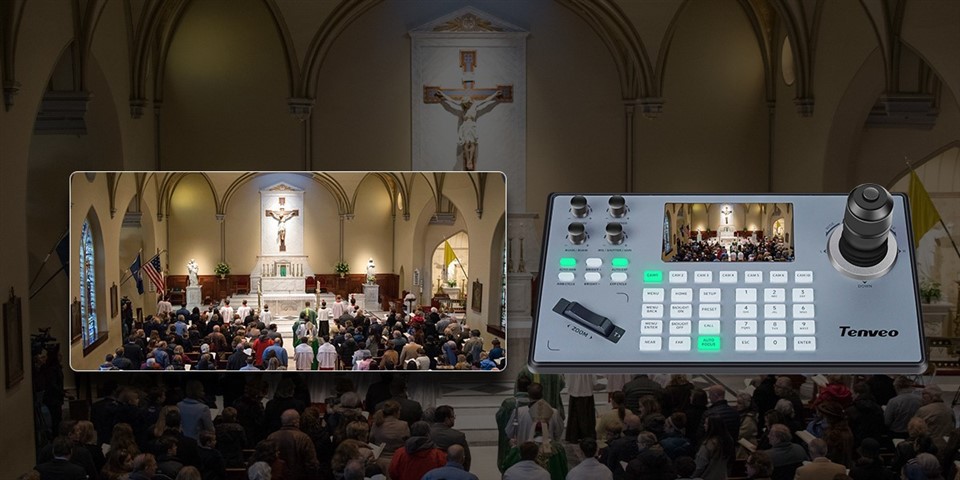
The Ip Ptz Keyboard Controller and IP Ptz Camera Controller are important accessories that can enhance the functionality and accuracy of Pelco Ptz Controllers. The Ip Ptz Keyboard Controller provides a user - friendly interface for operators to control the camera. It allows for more precise and intuitive control of the Pan, Tilt, and Zoom functions. The IP Ptz Camera Controller, on the other hand, can be used to manage multiple cameras simultaneously. It can ensure that each camera is accurately positioned and coordinated with the others, improving the overall efficiency of the surveillance system.
Conclusion
The positioning accuracy of Pelco Ptz Controllers is affected by multiple factors, including hardware quality, environmental conditions, communication protocols, and installation and calibration. In real - world applications, accurate positioning is crucial for the effectiveness of surveillance, industrial monitoring, and traffic monitoring systems. By understanding these factors and taking appropriate measures to measure and improve accuracy, users can ensure that their Pelco Ptz Controllers perform at their best.
If you are interested in our Pelco Ptz Controllers or need more information about their positioning accuracy, please feel free to contact us for procurement discussions. We are committed to providing high - quality products and excellent customer service to meet your specific needs.
References
- "Surveillance System Design and Implementation" by John Doe
- "Industrial Automation and Monitoring" by Jane Smith
- "Traffic Management and Surveillance" by Tom Brown