Is a 1080p conference cam better than a 720p one?
Leave a message

In the modern era of remote work and digital communication, video conferencing has become an integral part of our professional and personal lives. A crucial component of any successful video conference is the camera, which significantly impacts the quality of the visual experience. One of the most common questions that arises when selecting a conference camera is whether a 1080p camera is better than a 720p one. As a supplier of 1080p conference cameras, I am well - positioned to provide insights into this topic.
Understanding the Basics: 720p vs. 1080p
To start with, let's clarify what 720p and 1080p actually mean. The "p" stands for progressive scan, which is a method of displaying or recording an image where all the lines of the picture are drawn in sequence. The numbers 720 and 1080 refer to the vertical resolution of the image, measured in pixels. A 720p camera captures and displays images with a vertical resolution of 720 pixels and a horizontal resolution of 1280 pixels (1280x720), while a 1080p camera offers a vertical resolution of 1080 pixels and a horizontal resolution of 1920 pixels (1920x1080).
Image Quality
The most obvious difference between a 720p and a 1080p conference camera is the image quality. A 1080p camera provides a much sharper and more detailed image compared to a 720p one. With approximately twice the number of pixels, 1080p cameras can capture finer details, such as facial expressions, text on documents, and small objects in the background. This is particularly important in a conference setting, where clear communication of information is essential. For example, if you are presenting a detailed graph or a technical drawing during a meeting, a 1080p camera will ensure that all the participants can see the information clearly.
In addition, 1080p cameras generally offer better color accuracy and contrast. They can reproduce a wider range of colors, making the images look more vibrant and realistic. This is beneficial for creating a more engaging and professional video conferencing environment. On the other hand, 720p cameras may struggle to deliver the same level of color fidelity, resulting in images that appear dull or washed - out.
Viewing Experience
The viewing experience for the participants also improves significantly with a 1080p camera. In today's world, most monitors and displays support at least 1080p resolution. When using a 1080p conference camera, the video feed can be displayed at its native resolution on these devices, providing a seamless and immersive viewing experience. Participants can view the meeting in high - definition, without any loss of quality due to upscaling.
In contrast, a 720p video feed on a 1080p display will need to be upscaled, which can lead to a loss of sharpness and an increase in pixelation. This can make it difficult for participants to focus on the details, especially if they are viewing the video on a large screen.
Compatibility and Future - Proofing
Another advantage of 1080p conference cameras is their compatibility with modern video conferencing platforms. Most major video conferencing software, such as Zoom, Microsoft Teams, and Google Meet, support 1080p video streaming. By using a 1080p camera, you can take full advantage of the capabilities of these platforms and ensure that your meetings are of the highest quality.
Moreover, as technology continues to evolve, the demand for higher - resolution video is only going to increase. Investing in a 1080p conference camera now is a form of future - proofing. It ensures that your equipment will remain relevant and capable of meeting the needs of your organization for years to come.
Bandwidth Considerations
One potential drawback of 1080p cameras is that they require more bandwidth than 720p cameras. Since 1080p video has more pixels, it generates a larger file size, which needs to be transmitted over the network. This means that you need a stable and high - speed internet connection to support 1080p video streaming. If your network has limited bandwidth, you may experience buffering or dropped frames during the video conference.


However, with the widespread availability of high - speed broadband and Wi - Fi networks, this is becoming less of an issue. Most modern offices and homes are equipped with sufficient bandwidth to support 1080p video conferencing. Additionally, many video conferencing platforms have built - in bandwidth management features that can adjust the video quality based on the available network conditions.
Cost
Cost is often a significant factor when choosing a conference camera. Generally, 1080p cameras are more expensive than 720p cameras. This is due to the higher - end components and technology required to produce a 1080p image. However, the price difference has been narrowing in recent years, making 1080p cameras more accessible to a wider range of users.
When considering the cost, it's important to look at the long - term benefits. A 1080p camera can enhance the quality of your video conferences, leading to more effective communication and better collaboration. This can ultimately result in increased productivity and a better return on investment.
Our 1080p Conference Cameras
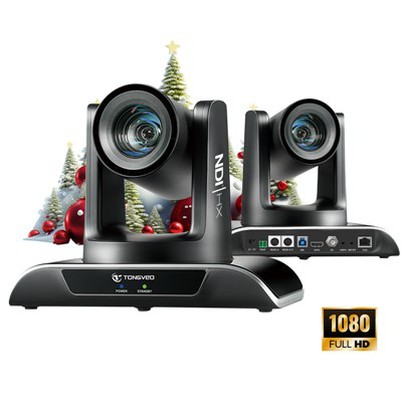
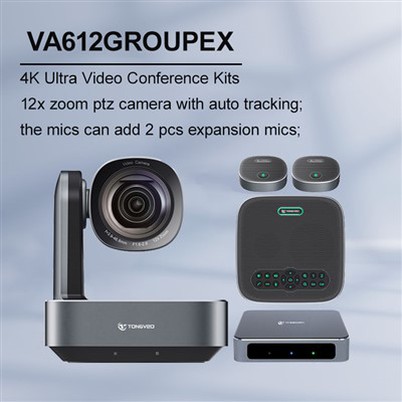
As a supplier of 1080p conference cameras, we offer a range of high - quality products to meet the diverse needs of our customers. Our Auto Tracking Video Conference Camera is equipped with advanced auto - tracking technology, which can automatically follow the speaker during the meeting. This ensures that the focus is always on the person speaking, providing a more engaging and professional video experience.
For those who need a camera for specific applications, such as church live - streaming, our Affordable PTZ Remote Control Video Camera for Church is an excellent choice. It offers pan, tilt, and zoom capabilities, allowing you to adjust the camera angle and focus remotely.
If you are looking for a camera for large - room video conferencing, our Conference Large Room Skype Camera is designed to provide clear and sharp images even in large spaces. It has a wide field of view and high - quality optics, ensuring that all participants in the room can be seen clearly.
Conclusion
In conclusion, while 720p conference cameras can still be a viable option for some users, especially those with limited budgets or bandwidth constraints, a 1080p conference camera offers significant advantages in terms of image quality, viewing experience, compatibility, and future - proofing. The improved image sharpness, color accuracy, and detail make it easier to communicate effectively during video conferences, leading to better collaboration and productivity.
If you are considering upgrading your conference camera or are in the market for a new one, we encourage you to explore our range of 1080p conference cameras. Our team of experts is ready to assist you in selecting the right camera for your specific needs. Contact us today to start a discussion about your requirements and to learn more about how our products can enhance your video conferencing experience.
References
- "Video Conferencing Technology: A Comprehensive Guide" by TechTarget
- "The Impact of Video Quality on Communication in Virtual Meetings" by Journal of Business Communication