How does noise reduction work on a webcam?
Leave a message

Hey there! As a webcam supplier, I often get asked about how noise reduction works on webcams. It's a super important feature these days, especially with the rise of remote work and online meetings. In this blog, I'm gonna break down the ins and outs of webcam noise reduction, so you can understand it better and make an informed choice when you're looking for a great webcam.
What's Noise in a Webcam Anyway?
Before we dive into how noise reduction works, let's talk about what noise is in the context of a webcam. Noise in a webcam image or video is basically unwanted visual artifacts. It looks like grainy dots or speckles on the screen, and it can really mess up the quality of your video. There are a few reasons why this noise shows up.
One of the main causes is low light. When the room isn't well - lit, the webcam's image sensor has to work harder to capture enough light. This can lead to an increase in electrical noise, which shows up as visual noise in the video. Another reason could be a high ISO setting. Just like in a regular camera, a high ISO on a webcam amplifies the signal from the sensor to make the image brighter. But this amplification also amplifies the noise.
Types of Noise Reduction
There are generally two types of noise reduction techniques used in webcams: hardware - based and software - based.
Hardware - Based Noise Reduction
Hardware - based noise reduction happens right at the source, on the webcam's image sensor itself. The image sensor is the heart of the webcam, responsible for capturing light and converting it into an electrical signal.
Some webcams use larger image sensors. A larger sensor has more surface area, which means it can collect more light. When it can collect more light, it doesn't have to work as hard in low - light conditions, and that reduces the amount of electrical noise generated.
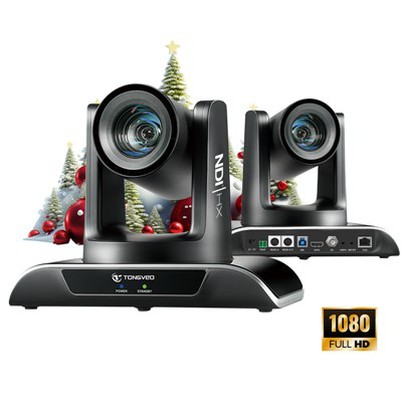
For example, our Huddle Conference Camera has a high - quality, relatively large image sensor. This allows it to perform really well in different lighting conditions, minimizing the amount of noise even when the light is less than ideal.
Another hardware - based method is the use of special filters on the sensor. These filters can block out some of the unwanted frequencies of light that might contribute to noise. They act like a sieve, letting only the good light through to the sensor, which helps in getting a cleaner image.
Software - Based Noise Reduction
Software - based noise reduction, on the other hand, comes into play after the image has been captured by the sensor. The webcam's built - in software or the software on your computer analyzes the video frames and tries to remove the noise.
One common software technique is called spatial filtering. This method looks at the pixels in a frame and compares them to their neighboring pixels. If a pixel looks very different from its neighbors and seems like it might be noise, the software will adjust its value to make it more in line with the surrounding pixels.
Another technique is temporal filtering. This one looks at multiple frames over time. Since noise is usually random and changes from frame to frame, while the actual image content changes in a more predictable way, the software can average out the differences between frames to reduce the noise.
How Do These Techniques Work Together?
In most modern webcams, both hardware and software noise reduction techniques work hand - in - hand. The hardware does its job of reducing the amount of noise that gets into the system in the first place. Then, the software steps in to clean up any remaining noise and enhance the overall image quality.
For instance, our Huddle Conference Camera uses a combination of a large, high - quality image sensor (hardware) and advanced noise - reduction algorithms (software). The hardware captures the best - possible image with as little noise as possible, and then the software fine - tunes the image, making it look sharp and clear, even in challenging lighting conditions.

Benefits of Good Noise Reduction
Having a webcam with effective noise reduction offers several benefits.
First of all, it improves the overall video quality. A noise - free video looks more professional and is easier to watch. Whether you're in a business meeting, teaching an online class, or just chatting with friends and family, a clear video makes the experience much better.
Secondly, it can save you from having to worry too much about lighting. With a webcam that has great noise reduction, you don't need to have a perfectly lit room. You can use it in a dimly lit office or a room with uneven lighting, and still get a decent - looking video.
Choosing the Right Webcam with Noise Reduction
When you're in the market for a webcam, there are a few things to look for to ensure it has good noise reduction.
Check the product specifications. Look for information about the image sensor size and the type of noise - reduction technology used. A larger sensor and a combination of hardware and software noise reduction are usually a good sign.
Read reviews. Other users' experiences can give you a good idea of how well the webcam performs in terms of noise reduction. Look for reviews that mention the video quality in different lighting conditions.
And of course, if you want a reliable option, our Huddle Conference Camera is a great choice. It's been designed with the latest noise - reduction technologies to give you a clear, sharp video every time.
Conclusion
So, there you have it! That's how noise reduction works on a webcam. It's a combination of hardware and software techniques that work together to give you a clean, high - quality video, even in less - than - perfect lighting.
If you're in the market for a new webcam and want to take advantage of great noise - reduction features, don't hesitate to reach out. We're here to help you find the perfect webcam for your needs. Whether it's for business, education, or personal use, we've got you covered. Contact us for a detailed discussion and let's start the procurement process together!
References
- "Digital Image Processing" by Rafael C. Gonzalez and Richard E. Woods.
- Various webcam product manuals and technical documents.