Three Trends in The Future Development Of Video Conferencing Technology
Sep 12, 2023
Leave a message
Remote video conferencing shortens the distance between enterprises, greatly shortens the communication distance, and increases the convenience for enterprises to expand their business in other places. Nowadays, most enterprises have begun to use video conferencing for daily work deployment, so what will be the trend of video conferencing in the future?
- Turning to cloud-based enterprise video conferencing solutions, enterprises do not need to deploy too much equipment, conference room equipment and various mobile communication devices can join remote conferences based on cloud conferencing platforms anytime, anywhere. It is cheaper to deploy and easier to use, making it a video conferencing method that more users choose today.
- Provide enterprises with private deployment and customized development solutions for video conferencing For characteristic user groups, such as government, military, political and legal systems, etc., there are high confidentiality requirements for communication, and the entire video conference system should run in the private network, based on this requirement, users can build a fully autonomous video conference platform within their private network.
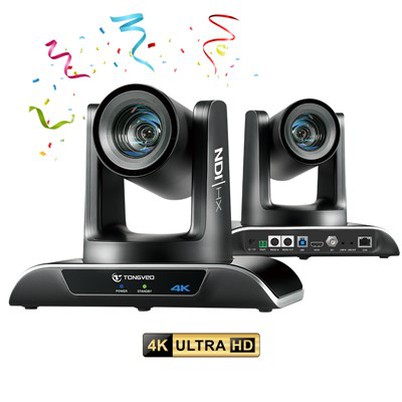
- Video conferencing solutions that provide HD video services for specific industries such as healthcare, education, finance, and security Specific industries have higher image requirements for remote video to meet their business needs, and 4K video conferencing is the first choice.
The enterprise video conferencing market is largely technology-driven and therefore highly competitive. The technology trend of video conferencing in 2023 is mainly concentrated in the following 3 blocks:
- 4K technology, to pursue a more realistic conference experience, some video conferencing suppliers use 4K cameras as the main component of the video conference system, The introduction of 4K cameras has caused a lot of sensation in the industry, and the 4K camera and video conference terminals, codecs and microphones, speakers in one of the 4K all-in-one machine is an unprecedented breakthrough in the industry, so far, This is the only 527 light conference with such R&D strength.
- AI technology cloud-based video conferencing solutions allow us to obtain a large amount of data on meeting habits. With the help of artificial intelligence and machine learning, this data allows us to optimize the use of the platform and improve the effectiveness of meetings. A lot of the data (e.g., virtual assistants, facial recognition) is provided by AI technology. At some levels, AI can help us improve meeting efficiency by identifying the optimal meeting length, the ideal number of participants, and the best time to meet.
- Multi-dimensional vision With the continuous introduction of video conferencing equipment in corporate offices, the "eyes of the office" of video conferencing cameras will also collect important data for enterprises and provide meeting progress for enterprises, which is very similar to sentiment analysis for customer service calls. Often, there is only one camera in the conference room, which does not give a complete picture of what everyone in the room is looking at or feeling. For large meetings, multiple cameras will be cameras to help observe the mood of participants: Are employees engaged? Is everyone's conversation clear and fluid? What's on the whiteboard? Of course, this will directly provide effective data support for improving the quality of meetings.